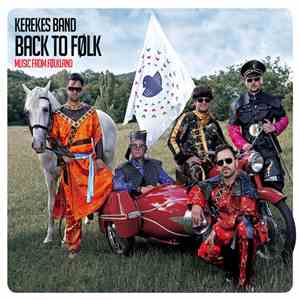
Kerekes Band - Back to Følk (Music from Følkland) download mp3 flac


Performer: Kerekes Band
Genre: Folk, World, & Country
Album: Back to Følk (Music from Følkland)
Released: 2017
Style: Folk
MP3 version ZIP size: 1361 mb
FLAC version RAR size: 1401 mb
WMA version ZIP size: 1911 mb
Rating: 4.8
Votes: 180
Other Formats: DXD MOD APE TTA AIFF DTS RA
South of Magna Hungaria, where the Knuckle-constellation glows, lies a little archipelago called Følklānd. It is onto these islands that some Magyari-speaking tribes fled from the Somazi, and of whom Brother Desiderius makes mention in the 10th century, AD. „Haeving no ships o’ their own whatsoever, they did taketh the isles with their horses strong. They were indeed wickedly attack’d by sea creatures of all description: otters, caymans, sea-hedgehogs, sea-lions and the liketh, but Great Følklôrmān did haeve all this armada of animalia crush’d into pieces, in utmost glory, and did findth a new land for his people brave.” The inhabitants of Følklānd have been waiting for a ship to rescue them since the 10th century, and keeping their tradition, they continue to live their horse-nomadic lives. According to the Book of Law laid down by (Great) Følklôrmān I., they heed and follow the path of the Holy Sparrow, and in doing so, they set up their tents on different parts of the island as necessary.
Area: 0.31 følklānd møtschung
Form of State: autonomous principality
Leader: (Little) Følkush I.
Heraldic animal: sparrow
Natural history
The Følklānd Islands are situated south of Magna Hungaria, right at the meeting of Somazi Bay and Teref. The archipelago consists of five islands, namely Greater Følk, Følkistān, Dragønwørt, Høly Sparrøw, and Anønymus, all of which were formed by lava eruptions along the fault lines in the geological layers. The greatest, still active volcanoes of Følklānd are called Szïlaj (meaning „fearless”) and Kuku (meaning „kuku”).
Fauna
The Følklānd sparrow is considered sacred by the islanders, and consequently its population started growing very rapidly from the 12th century on. A full-grown sparrow (Passer domesticus følklāndicus) may weigh as much as 100-150 kilograms. It is protected and nourished all over the area, and its natural enemies have been almost completely exterminated – with the exception of the Flower peacock dragged onto the islands from the west by the young. The Flower peacock (Pavo quadripedis) has become a symbol for the young, embodying their desire for freedom, peace, and free trade. Every Følklānd blood horse has a single ancestor stud named Golden Stallion, which lived in the 11th century. The life-size statue of Golden Stallion is a the favourite meeting point of the young in the island of Følkistān.
Culture
The local folklore is characterised by the flute-lute-viola centered rough shepherd sound named Puszta Beat, in which ancient melodies mix with western beat music favoured by the young and heard on Radio Free Europe. One of the main tourist attractions of the islands is „Back to Følk”, during which Følklānd Hungarians – commemorating their occupation of the islands on 1st October each year following ancient tradition – hang on to the tails of horses while lying on wineskins filled with air to drift across the sea between the islands. Their first literary work is a book of law titled „Admonitions of (Great) Følklôrmān I to Chieftain Hunør Khān” in which laws laid down demand that no speaking be tolerated during swimming and eating.
Economy
Since Følklānd’s rocky coastal sector is unapproachable because of the constant wild waves, all the goods intended for export, such as phosphate, dragonwort, broomcorn and panic-grass stand in heaps by the foot of the rock called Stud.
The firm producing the dragon-patterned clothes of the population is owned in 30% by the Principality of Følklānd and in 70% by the Gemïnï Brøthers Company.
On the mountain-pastures rough shepherding is very common, and horse-breeding is also prominent. In the 1950s – in an attempt to replace horse-keeping – the local production of motörcycles (and -heads) has seen a rapid development and subsequently a decline, thanks to the Hunør Khān Møtørs Company. The Trans-Nømād Express, a motörcycle model with a sidecar produced in 1951 is still a keenly sought-after item among serious collectors. Motorcyle production has finally led to hostilities between the ethnø and the funku ethnic groups, which reached its culmination in the Anønymus Beach battle fought in 1952 for the areas rich in oil.
Ethnic, linguistic and religious distribution
50% of the population is made up of ethnøs living in the southern part of the islands. Apart from them, about 17,000 funkus live in the north, and 78 ethnic marmøts on the peripheries.
The greater part of the population are nature-wordhippers. About 80% are sparrow-worshippers, and 20% are of Thursday-faith.
The official language of the country is Magyarï (i.e. an ancient form of Hungarian). A small group also speaks Horsean and NyeNyeC(+) (the latter is also a programming language)
Følklānd’s Ancient National Anthem (translated in prose)
Brave warriors, fairest maidens,
Woods and meadows, wild volcanoes,
Our shores are washed by raging waves!
Five Chieftains of our ancient land
Bravely lead our fearless people
To the island of Great Følklôrmān
Our song is blowing in the wind
Oh how good we feel!
Oh God, please bless us…
Please do, we beg you to,
Our equestrian people still
Awaits a ship,
The Tartar chased us here
Old Magyarland is far from us,
Our Puszta is the purest green,
Our seas are deep blue,
Protect us,
Oh Holy Sparrow.
Ohhhhhhhhhhhh la-la-la-la-laaa
Oh Holy Sparrow la-la-la-la-laaa
Oh Holy Sparrow la-la-la-la-laaa
Oh Holy Sparrow la-la-la-la-laaa
Blessed holy land, need no visa
Whoevers is brave but dare not swim
can take refuge in the lands
Of splendid Følklānd
His lute resonates with shaman-songs
Many a lad playeth on wooden flutes
All our bards have been castrated
Our song is blowing in the wind
Oh how good we feel!
Oh God, please bless us…
English version by Péter Antonyi
Back to Følk
Music from Følklānd
1. Back to Følk – 2:45
2. Trans-Nømād Express – 3:07
3. Aranycsődör / Golden Stallion – 6:00
4. Følklôrmān Ïndulôja / Følklôrmān’s March – 1:25
5. Szïlaj / Fearless – 3:23
6. Hunør Khān – 5:26
7. Fløwer Pāva – 3:25
8. Følklānd Ősï Hïmnusza / Følklānd Ancient National Anthem – 2:26
9. Sārkānyfű / Dragonwort – 3:15
10. Puszta Beat - 3:46
11. Anønymus - 0:59
12. Sātørfa / Stud – 3:08
Összesen : 39:06
Fehér Zsombor – Følklāndi furulya/Flute (1-3, 5, 7-10, 12), Hosszi/Long Flute (3, 4, 8), Duda/Bagpipe (1, 2), Berêngārøn , Furmønd Ørgøïā (4, 6), Zøbøk
Námor Csaba – Koboz (1-3, 5-10, 12), Hunøbennïm
Csarnó Ákos – Kontra/Viola (1-3, 5-10, 12), Bødrøm (3, 12), Szāplā
Kónya Csaba – Bass (1-3, 5-10, 12) , Høttāmørkï āpêntā
Fehér Viktor – Dob/Drums (1-3, 5-7, 9-10, 12), Køppølā (2, 3)
Recorded in March 2016, Tom-Tom Studio, Budapest / Recorded by Kölcsényi Attila
Mixed from March till May 2016, Standing Waves Studios, Egerszalók / Mixed by Sohajda Péter, Fehér Zsombor
Mastered in June 2016 by Zsidei János
Produced by Fehér Zsombor
Graphic design by Ipacs Géza / Apacs Studio
Photo by Nemes Róbert
Akiknek köszönettel tartozunk / Special thanks:
Eger MJV Önkormányzata, Følklāndi Magyar Konzulátus, I. (Kis) Følkush Művészeti Alapítvány, Antonyi Péter, Ballagó Péter, Beke István, Czank Ferenc, Dsupin Pál, Evat Zrt – Kulturma Divízió, Flott Trans, Furák László, Ipacs Géza, Klausmann Viktor, Ladányi Ferenc, Mátyus Udvarház, MVM, Nagy Dániel, Nemzeti Kulturális Alap Igazgatósága, Rázsi Botond, Simon József, Tisza Cipő
www.facebook.com/kerekesband
www.youtube.com/kerekesband
www.kerekesband.com
Genre: Folk, World, & Country
Album: Back to Følk (Music from Følkland)
Released: 2017
Style: Folk
MP3 version ZIP size: 1361 mb
FLAC version RAR size: 1401 mb
WMA version ZIP size: 1911 mb
Rating: 4.8
Votes: 180
Other Formats: DXD MOD APE TTA AIFF DTS RA
Free Download Kerekes Band - Back to Følk (Music from Følkland)
- 1361 downloads at 17 mb/s
MP3 version .RAR archive
- 1401 downloads at 13 mb/s
FLAC version .RAR archive
- 1911 downloads at 14 mb/s
WMA version .RAR archive
Tracklist
| A1 | Back to Folk |
| A2 | Trans-Nomad Express |
| A3 | Aranycsődör / Golden Stallion |
| A4 | Folklorman's March |
| A5 | Szïlaj / Fearless |
| B1 | Hunør Khān |
| B2 | Anønymus |
| B3 | Fløwer Pāva |
| B4 | Sārkānyfű / Dragonwort |
| B5 | Puszta Beat |
Notes
FølklāndSouth of Magna Hungaria, where the Knuckle-constellation glows, lies a little archipelago called Følklānd. It is onto these islands that some Magyari-speaking tribes fled from the Somazi, and of whom Brother Desiderius makes mention in the 10th century, AD. „Haeving no ships o’ their own whatsoever, they did taketh the isles with their horses strong. They were indeed wickedly attack’d by sea creatures of all description: otters, caymans, sea-hedgehogs, sea-lions and the liketh, but Great Følklôrmān did haeve all this armada of animalia crush’d into pieces, in utmost glory, and did findth a new land for his people brave.” The inhabitants of Følklānd have been waiting for a ship to rescue them since the 10th century, and keeping their tradition, they continue to live their horse-nomadic lives. According to the Book of Law laid down by (Great) Følklôrmān I., they heed and follow the path of the Holy Sparrow, and in doing so, they set up their tents on different parts of the island as necessary.
Area: 0.31 følklānd møtschung
Form of State: autonomous principality
Leader: (Little) Følkush I.
Heraldic animal: sparrow
Natural history
The Følklānd Islands are situated south of Magna Hungaria, right at the meeting of Somazi Bay and Teref. The archipelago consists of five islands, namely Greater Følk, Følkistān, Dragønwørt, Høly Sparrøw, and Anønymus, all of which were formed by lava eruptions along the fault lines in the geological layers. The greatest, still active volcanoes of Følklānd are called Szïlaj (meaning „fearless”) and Kuku (meaning „kuku”).
Fauna
The Følklānd sparrow is considered sacred by the islanders, and consequently its population started growing very rapidly from the 12th century on. A full-grown sparrow (Passer domesticus følklāndicus) may weigh as much as 100-150 kilograms. It is protected and nourished all over the area, and its natural enemies have been almost completely exterminated – with the exception of the Flower peacock dragged onto the islands from the west by the young. The Flower peacock (Pavo quadripedis) has become a symbol for the young, embodying their desire for freedom, peace, and free trade. Every Følklānd blood horse has a single ancestor stud named Golden Stallion, which lived in the 11th century. The life-size statue of Golden Stallion is a the favourite meeting point of the young in the island of Følkistān.
Culture
The local folklore is characterised by the flute-lute-viola centered rough shepherd sound named Puszta Beat, in which ancient melodies mix with western beat music favoured by the young and heard on Radio Free Europe. One of the main tourist attractions of the islands is „Back to Følk”, during which Følklānd Hungarians – commemorating their occupation of the islands on 1st October each year following ancient tradition – hang on to the tails of horses while lying on wineskins filled with air to drift across the sea between the islands. Their first literary work is a book of law titled „Admonitions of (Great) Følklôrmān I to Chieftain Hunør Khān” in which laws laid down demand that no speaking be tolerated during swimming and eating.
Economy
Since Følklānd’s rocky coastal sector is unapproachable because of the constant wild waves, all the goods intended for export, such as phosphate, dragonwort, broomcorn and panic-grass stand in heaps by the foot of the rock called Stud.
The firm producing the dragon-patterned clothes of the population is owned in 30% by the Principality of Følklānd and in 70% by the Gemïnï Brøthers Company.
On the mountain-pastures rough shepherding is very common, and horse-breeding is also prominent. In the 1950s – in an attempt to replace horse-keeping – the local production of motörcycles (and -heads) has seen a rapid development and subsequently a decline, thanks to the Hunør Khān Møtørs Company. The Trans-Nømād Express, a motörcycle model with a sidecar produced in 1951 is still a keenly sought-after item among serious collectors. Motorcyle production has finally led to hostilities between the ethnø and the funku ethnic groups, which reached its culmination in the Anønymus Beach battle fought in 1952 for the areas rich in oil.
Ethnic, linguistic and religious distribution
50% of the population is made up of ethnøs living in the southern part of the islands. Apart from them, about 17,000 funkus live in the north, and 78 ethnic marmøts on the peripheries.
The greater part of the population are nature-wordhippers. About 80% are sparrow-worshippers, and 20% are of Thursday-faith.
The official language of the country is Magyarï (i.e. an ancient form of Hungarian). A small group also speaks Horsean and NyeNyeC(+) (the latter is also a programming language)
Følklānd’s Ancient National Anthem (translated in prose)
Brave warriors, fairest maidens,
Woods and meadows, wild volcanoes,
Our shores are washed by raging waves!
Five Chieftains of our ancient land
Bravely lead our fearless people
To the island of Great Følklôrmān
Our song is blowing in the wind
Oh how good we feel!
Oh God, please bless us…
Please do, we beg you to,
Our equestrian people still
Awaits a ship,
The Tartar chased us here
Old Magyarland is far from us,
Our Puszta is the purest green,
Our seas are deep blue,
Protect us,
Oh Holy Sparrow.
Ohhhhhhhhhhhh la-la-la-la-laaa
Oh Holy Sparrow la-la-la-la-laaa
Oh Holy Sparrow la-la-la-la-laaa
Oh Holy Sparrow la-la-la-la-laaa
Blessed holy land, need no visa
Whoevers is brave but dare not swim
can take refuge in the lands
Of splendid Følklānd
His lute resonates with shaman-songs
Many a lad playeth on wooden flutes
All our bards have been castrated
Our song is blowing in the wind
Oh how good we feel!
Oh God, please bless us…
English version by Péter Antonyi
Back to Følk
Music from Følklānd
1. Back to Følk – 2:45
2. Trans-Nømād Express – 3:07
3. Aranycsődör / Golden Stallion – 6:00
4. Følklôrmān Ïndulôja / Følklôrmān’s March – 1:25
5. Szïlaj / Fearless – 3:23
6. Hunør Khān – 5:26
7. Fløwer Pāva – 3:25
8. Følklānd Ősï Hïmnusza / Følklānd Ancient National Anthem – 2:26
9. Sārkānyfű / Dragonwort – 3:15
10. Puszta Beat - 3:46
11. Anønymus - 0:59
12. Sātørfa / Stud – 3:08
Összesen : 39:06
Fehér Zsombor – Følklāndi furulya/Flute (1-3, 5, 7-10, 12), Hosszi/Long Flute (3, 4, 8), Duda/Bagpipe (1, 2), Berêngārøn , Furmønd Ørgøïā (4, 6), Zøbøk
Námor Csaba – Koboz (1-3, 5-10, 12), Hunøbennïm
Csarnó Ákos – Kontra/Viola (1-3, 5-10, 12), Bødrøm (3, 12), Szāplā
Kónya Csaba – Bass (1-3, 5-10, 12) , Høttāmørkï āpêntā
Fehér Viktor – Dob/Drums (1-3, 5-7, 9-10, 12), Køppølā (2, 3)
Recorded in March 2016, Tom-Tom Studio, Budapest / Recorded by Kölcsényi Attila
Mixed from March till May 2016, Standing Waves Studios, Egerszalók / Mixed by Sohajda Péter, Fehér Zsombor
Mastered in June 2016 by Zsidei János
Produced by Fehér Zsombor
Graphic design by Ipacs Géza / Apacs Studio
Photo by Nemes Róbert
Akiknek köszönettel tartozunk / Special thanks:
Eger MJV Önkormányzata, Følklāndi Magyar Konzulátus, I. (Kis) Følkush Művészeti Alapítvány, Antonyi Péter, Ballagó Péter, Beke István, Czank Ferenc, Dsupin Pál, Evat Zrt – Kulturma Divízió, Flott Trans, Furák László, Ipacs Géza, Klausmann Viktor, Ladányi Ferenc, Mátyus Udvarház, MVM, Nagy Dániel, Nemzeti Kulturális Alap Igazgatósága, Rázsi Botond, Simon József, Tisza Cipő
www.facebook.com/kerekesband
www.youtube.com/kerekesband
www.kerekesband.com
Barcode and Other Identifiers
- Barcode (Scanned): 5999548113639
Other versions
| Category | Artist | Title (Format) | Label | Category | Country | Year |
|---|---|---|---|---|---|---|
| KB07 | Kerekes Band | Back To Følk (Music From Følkland) (CD, Album) | Not On Label (Kerekes Band Self-released) | KB07 | Hungary | 2016 |
New albums
Last added
 Wooden Peak - Polar
 Konkrete Canticle - Experiments In Disintegrating Language
 The Black & White Minstrels ,& Joe Loss & His Orchestra - Thirty Golden Greats
 Brocas Helm - Black Death
 Third World - Music Hall In Concert
 Max Duley - Bliss Within Agony
 Electric Food - Flash
 Mel Williams - Perfect Love / Let There Be Peace
 Sol Invicto - Initium
 Rolf Kuhn Orchestra Featuring Jack Sheldon, Chuck Wayne, Jim Hall - Jazz Kings